Santa Rosa Junior College, a California Community College member organization, sits on the traditional territories of the Southern Pomo and Coast Miwok people. We acknowledge and honor, with gratitude, the land itself and the people who have stewarded it throughout the generations.
The Indigenous people of California, also referred to as Native Americans or American Indians, who formed hundreds of unique, independent tribes all over the state, have lived here since time immemorial. Hundreds, perhaps thousands of generations. This is their homeland.
European colonization came to California in the late 1700s through the Spanish Missionization system; however, there were always rebellions, acts of resistance, and avoidance.
After the Mexican War of Independence, Mexico claimed the area known today as California and began granting large pieces of land called Ranchos to military leaders and politicians, further colonizing California. The Native Californians continued to rebel, resist, or avoid.
With westward expansion, Americans moved from the East Coast of the USA to the West Coast and colonized. They staged the Bear Flag Revolt and claimed the California Territory away from Mexico and joined the USA after the Mexican-American War. The Native Californians continued to rebel, resist, or avoid.
When gold was discovered in California, it spurred the Gold Rush era, for which to the Native Californians it was a genocide, as researched and described by author Dr. Benjamin Madley. The Native Californians continued to rebel, resist, or avoid.
In the years 1851-1853, the USA began negotiating treaties with the tribes of California and completed 18 of them; however, upon bringing them back to the US Senate for ratification, the Senate decided to table them and lock them away in secrecy. The USA broke its promise to the California Native Americans. For about 50 years, the treaties stayed hidden. In the 1860’s and 1870’s, some other treaties were negotiated, and some reservations were created during this time; however, the large majority of California Native people were living without rights, without power, and their lands were being taken away or encroached upon. The Native Californians continued to rebel, resist, or avoid.
From the 1880’s until the 1940’s, the USA established and operated Indian Boarding Schools to aggressively and coercively assimilate Native American children into common White Christian American culture and lifestyle. This went on for about 3 generations, causing loss of culture, language, traditional knowledge, and unity. Still, some Native Californians continued to rebel, resist, or avoid.
The California Unratified Treaties were exposed in 1904; the US federal government and the State of California slowly began to repair the harms that had been done.
In 1924, the US Congress officially declared that all Native Americans were now US Citizens. Native Americans all over the country and in California have been working hard to support and collaborate with the USA while also upholding and protecting their lands, people, and culture.
Governor Culbert Olson first declared October 1 as "Indian Day" in 1939, making California the first state to create such a holiday.
California Native American Day is held in observance to honor and celebrate the Indigenous people, tribes, and their cultures of California; also referred to as Native Americans or American Indians.
Governor Ronald Reagan moved the observance to the fourth Friday of September in 1968.
The state legislature passed Assembly Bill 1953 in 1998, designating it an official state holiday.
In 2019, Governor Gavin Newsom officially apologized to the California Native Americans and enacted an executive order documenting this statement.
State updates made it an official judicial holiday starting in 2022, championed in legislation by CA Assemblyman James Ramos - the first California Native American State Assemblyman and member of the Yuhaaviatam of San Manuel Nation.
The Board of Trustees of the SRJC District passed a resolution to recognize Native American Day as a holiday at the College. That date was September 13, 2022. The first time the holiday was observed was September 26, 2022. After that, the holiday became a regular part of our work calendar. The initiative was championed by SRJC Professor Dr. Brenda Flyswithhawks.
Many of our students, faculty, and staff of the SRJC are members of local tribes.
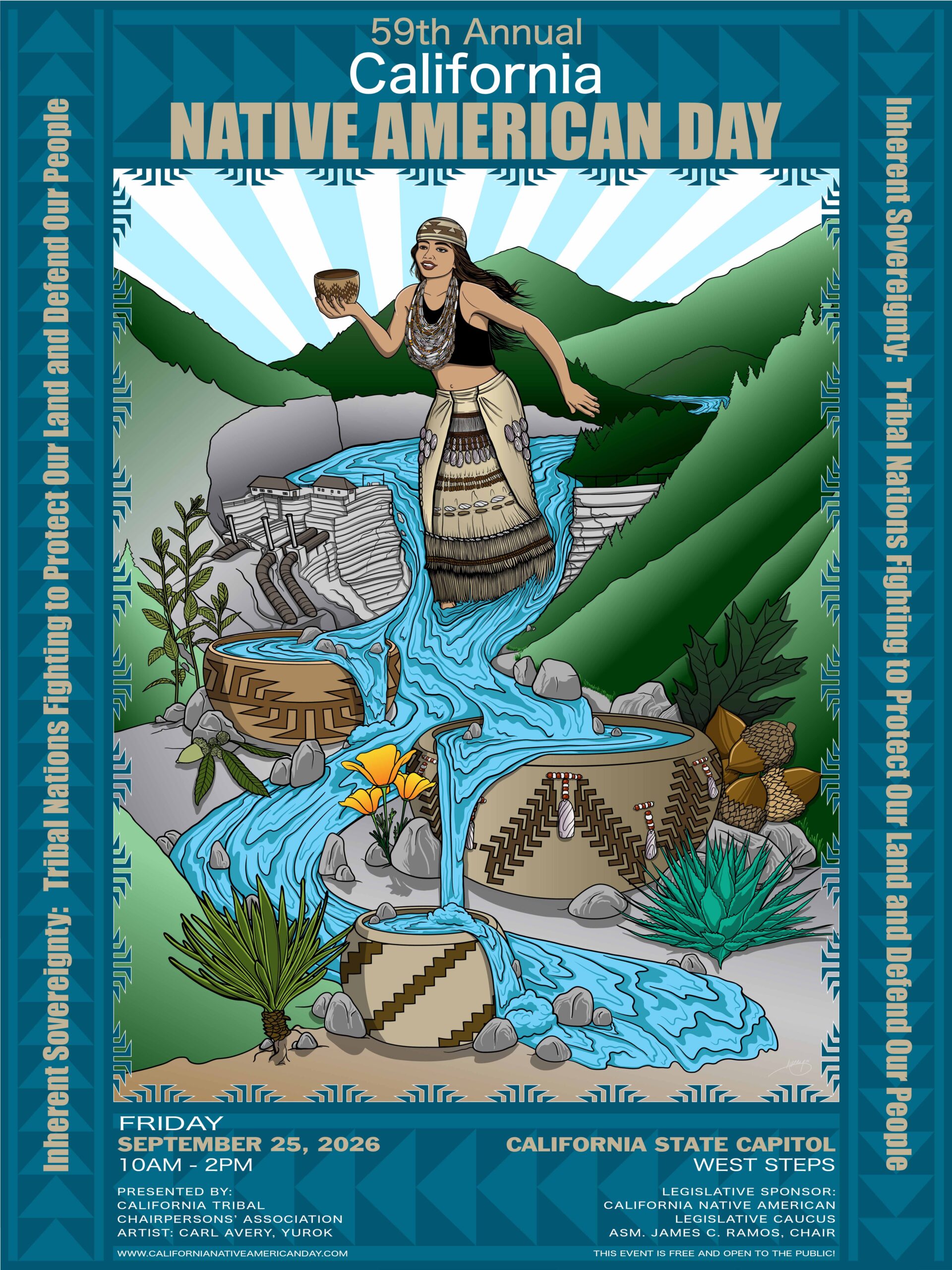
Students, Staff, and Faculty of our own SRJC Native American Center will be attending the CA Native American Day celebration this year at the State Capitol in Sacramento on Friday, Sept. 25th 2026, as they have in past years.